Free Support 24/7
011 208 1308

Free Support 24/7
011 208 1308

Ratings: ★★★☆☆ (3.5 / 5)
Genre: Literary Fiction, Erotica, Psychological Fiction, Feminist Literature
Book Review:
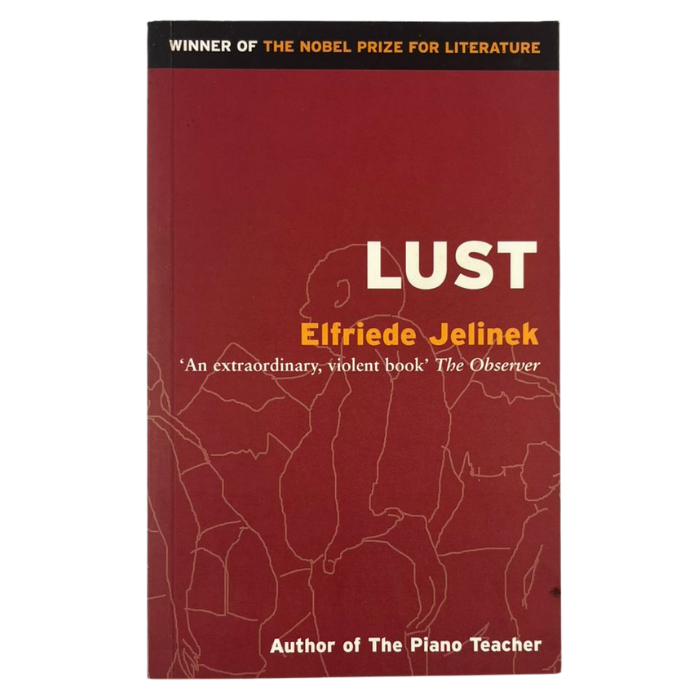
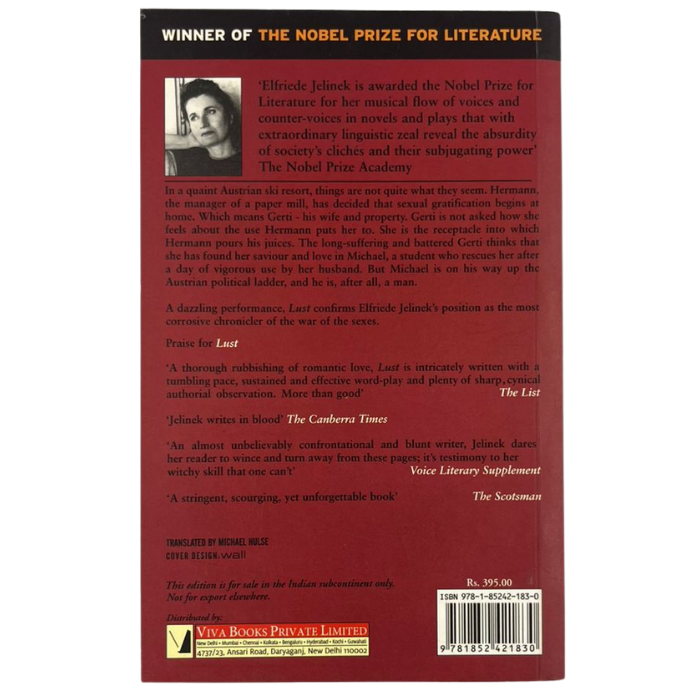
Elfriede Jelinek, the Nobel Prize-winning Austrian author, is not a writer for the faint of heart. Her work is a relentless assault on the comfortable illusions of society, and Lust, her most controversial novel, is perhaps the purest expression of her corrosive vision. It is a brutal, unflinching, and deeply disturbing exploration of the war between the sexes, a book that dares its reader to look away.
The novel is set in a picturesque Austrian ski resort, a place of pristine snow and cozy chalets, but this idyllic surface conceals a nightmare. The story centers on Gerti, the wife of Hermann, the manager of a local paper mill. To Hermann, Gerti is not a person but a possession, a body to be used for his own gratification. Jelinek describes their relationship in language that is deliberately harsh and repetitive, stripping it of any pretense of love or romance. Hermann's sexual demands are portrayed as a form of mechanical, dehumanizing violence, a relentless cycle of abuse that leaves Gerti battered and broken.
Gerti's desperate hope for escape comes in the form of Michael, a handsome young student who seems to offer the possibility of tenderness and love. But Jelinek offers no easy salvation. Michael, it turns out, is just another man on his way up the political ladder, and he, too, is incapable of seeing Gerti as anything more than an object. The novel's bleak vision is unrelenting.
Jelinek's prose is the book's most powerful weapon. It is a dense, rhythmic, and often poetic torrent of words, a ''musical flow of voices and counter-voices,'' as the Nobel Academy put it. She uses word-play, repetition, and sharp, cynical observations to create a disorienting and unforgettable reading experience. This is not a book that seeks to entertain; it seeks to expose. It lays bare the ugly truths about power, violence, and the myths of romantic love that, in Jelinek's view, trap women in a cycle of oppression.
Lust is not a comfortable read. It is confronting, challenging, and often deeply upsetting. It is a book that will provoke strong reactions, and it is not for everyone. But for readers who are willing to venture into dark territory, it is a work of immense literary power, a stringent, scourging, yet unforgettable book that confirms Jelinek's status as one of the most important and provocative writers of our time.

040929-img.png)