Free Support 24/7
011 208 1308

Free Support 24/7
011 208 1308

Ratings: ★★★☆☆ (3/5)
Genre: Political Science, History, Communism, Non-Fiction
Book Review:
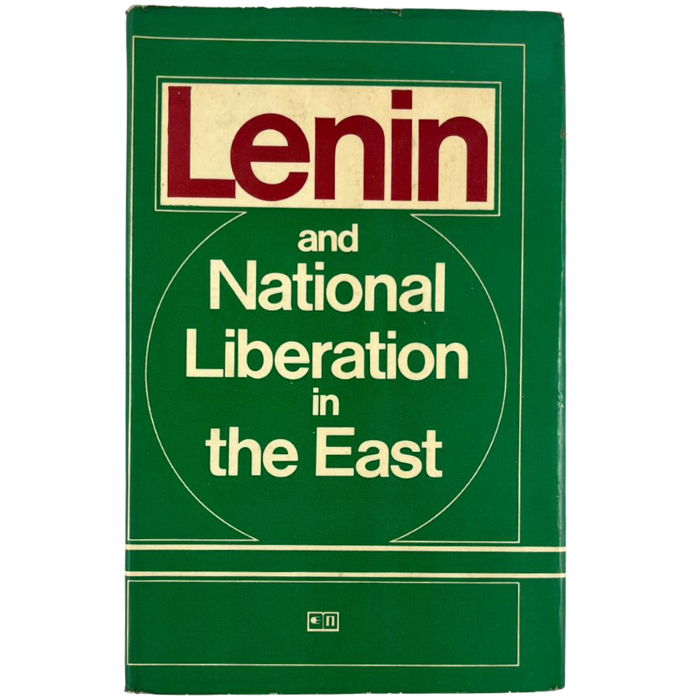
Lenin and National Liberation in the East is a fascinating historical artifact, a window into the world of Soviet-era political thought. Published by Progress Publishers in Moscow, this book represents an official attempt to apply Lenin's theoretical framework to the anti-colonial struggles that were sweeping Asia and Africa in the mid-20th century.
The book's central thesis is that Lenin's writings on imperialism, national self-determination, and the revolutionary potential of the colonial world provided a crucial roadmap for liberation movements in the East. The authors (who are not individually named) argue that Lenin's ideas helped to shape the course of revolutions in countries across Asia and Northern Africa, from China and Vietnam to Algeria and Egypt.
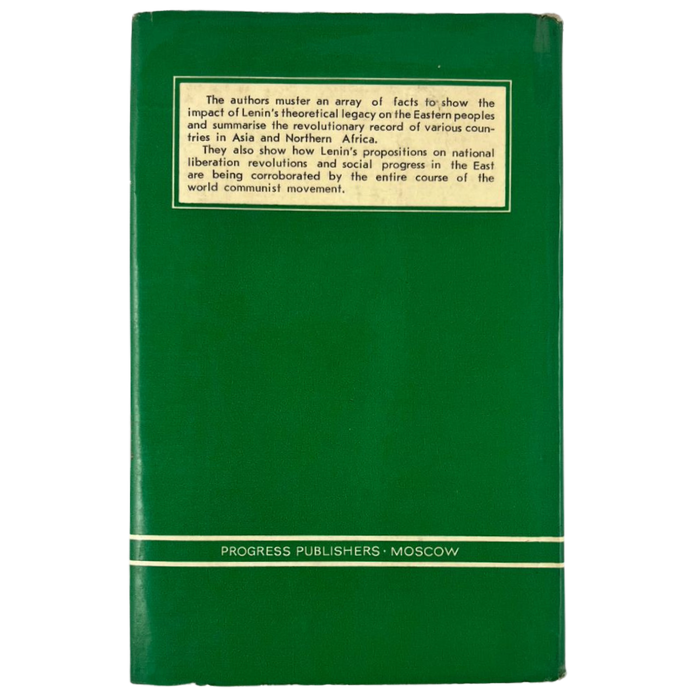
The book is organized as a series of essays or chapters, each examining the revolutionary history of a particular region or country through a Leninist lens. The authors muster a range of historical facts and events to support their arguments, seeking to demonstrate how Lenin's propositions were ''corroborated by the entire course of the world communist movement.''
As a work of scholarship, this book is deeply rooted in its time and place. It is unapologetically partisan, presenting a rigidly orthodox Marxist-Leninist interpretation of history. There is little room for nuance or dissent. The language is often formulaic, and the analysis is driven by ideological commitment rather than open-ended inquiry.
However, as a historical document, it is invaluable. It offers a clear and uncompromising statement of how the Soviet Union and its allies understood the world during the Cold War. It reveals the intellectual and ideological framework that guided Soviet foreign policy and its support for national liberation movements around the globe.
For readers interested in the history of communism, in Soviet ideology, or in the intellectual roots of anti-colonial struggles, Lenin and National Liberation in the East is a useful and revealing text. It should be read not as an objective history, but as a primary source, a document that illuminates the beliefs and assumptions of a powerful movement that shaped the 20th century. It is a book for scholars and dedicated students of political history, rather than for the general reader.