Free Support 24/7
011 208 1308

Free Support 24/7
011 208 1308

Ratings:★★★★☆ (4.5/5)
Genre: Political Science / Sri Lankan History / Ethnic Studies / Sociology / Conflict Studies
Book Review:
The Definitive Analysis of Sri Lanka's Ethnic Tragedy
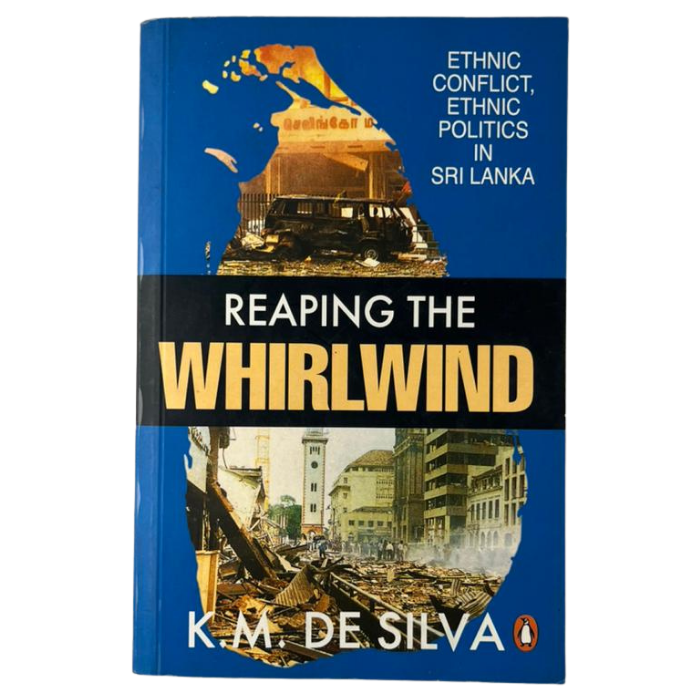
K.M. de Silva's ''Reaping the Whirlwind'' stands as a towering achievement in the study of Sri Lanka's ethnic conflict. It is a work of immense scholarship, deep insight, and sobering analysis, written by a historian who has spent a lifetime studying the subject. For anyone seeking to understand the roots, the evolution, and the tragic consequences of the island's civil war, this book is indispensable.
De Silva's approach is historical and analytical. He does not simply narrate events; he explains them, tracing the complex interplay of forces that led to the eruption of violence. He begins by examining the colonial legacy, showing how British policies helped to create and harden ethnic identities. He then carefully dissects the post-independence period, focusing on the key decisions and policies that alienated the Tamil minority: the disenfranchisement of Indian Tamil plantation workers, the ''Sinhala Only'' Act, the standardization of university admissions, and the rise of Sinhalese Buddhist nationalism.
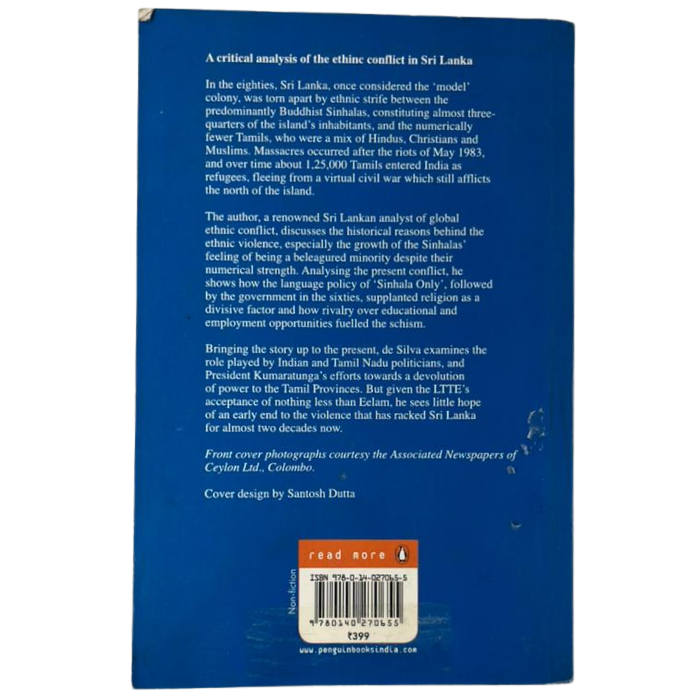
The book is particularly strong in its analysis of the 1970s and 1980s, the crucial decades when the conflict escalated from political protest to armed insurgency. De Silva examines the growth of Tamil militancy, the failed attempts at negotiation, the tragic events of July 1983, and the descent into a full-scale civil war. He also provides a balanced and insightful assessment of the roles played by India, the LTTE, and successive Sri Lankan governments.
What makes this book so valuable is its even-handedness. De Silva is a Sri Lankan scholar, but he writes with a remarkable degree of objectivity. He acknowledges the grievances and mistakes on all sides, and he refuses to offer simplistic explanations or easy solutions. He concludes, with a heavy heart, that given the LTTE's demand for a separate state (Eelam), there was little hope for an early end to the violence.
''Reaping the Whirlwind'' is not a book for the casual reader. It is a serious, scholarly work that demands attention. But for anyone who wants to truly understand one of the most tragic and complex conflicts of the late 20th century, it is essential reading. It is a masterpiece of political analysis and a profound meditation on the destructive power of ethnic politics.