Free Support 24/7
011 208 1308

Free Support 24/7
011 208 1308


Ratings: ★★★★☆ (4.5/5)
Genre: Philosophy, Buddhism, Religion, Political Science
Book Review:
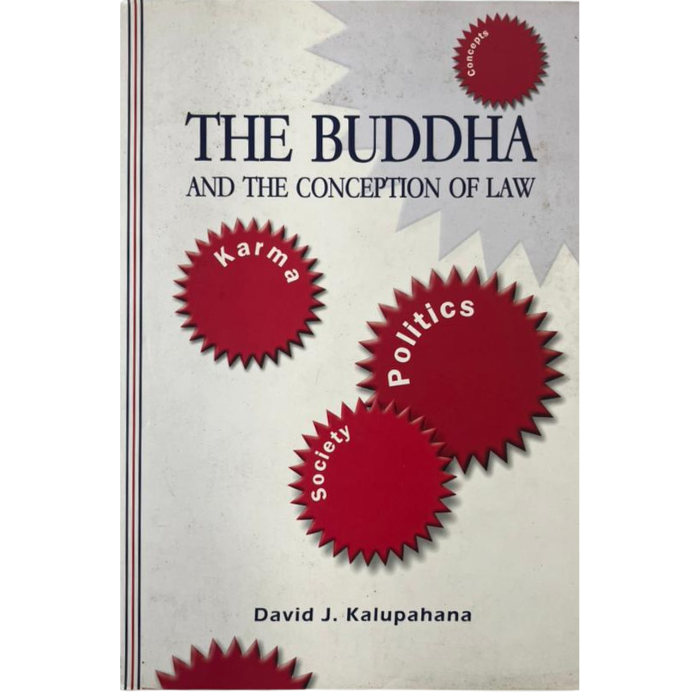
David J. Kalupahana, one of the most distinguished Buddhist scholars of our time, delivers another masterful work in ''The Buddha and the Conception of Law: Karma, Society, Politics, Conflict.'' Kalupahana, Emeritus Professor of Philosophy at the University of Hawaii and author of seminal works like ''Causality: The Central Philosophy of Buddhism'' and ''A History of Buddhist Philosophy,'' brings his immense erudition to bear on a topic of profound and enduring relevance: the Buddha's conception of law and its implications for society, politics, and conflict.
The book moves beyond a narrow, legalistic understanding of ''law'' to explore its broader philosophical and practical dimensions in the Buddhist tradition. Kalupahana examines the foundational concept of karma, not as a simple system of cosmic justice, but as a natural law of cause and effect that underpins ethical behavior and social order. He then delves into the Buddha's teachings on society, exploring his vision of a harmonious community and his critique of the social hierarchies and injustices of his time.
Perhaps most significantly, the book addresses the Buddha's political philosophy. Kalupahana explores his ideas on governance, leadership, and the ideal ruler, drawing on sources like the Aggañña Sutta and the Cakkavatti Sīhanāda Sutta. He also examines the Buddha's approach to conflict, emphasizing his advocacy for dialogue, non-violence, and the resolution of disputes through reasoned discussion. This makes the book particularly timely in our own era of political and social turmoil.
Written with Kalupahana's characteristic clarity and scholarly rigor, ''The Buddha and the Conception of Law'' is an invaluable resource for students and scholars of Buddhist philosophy, political theory, and religious studies. It demonstrates that the Buddha's teachings offer not only a path to personal liberation but also a profound and practical wisdom for navigating the complexities of social and political life. A significant contribution to the field.