Free Support 24/7
011 208 1308

Free Support 24/7
011 208 1308

Ratings: ★★★★☆ (4.1/5)
Genre: Literary Fiction, Philosophical Fiction, Romance, Contemporary Fiction
Book Review:
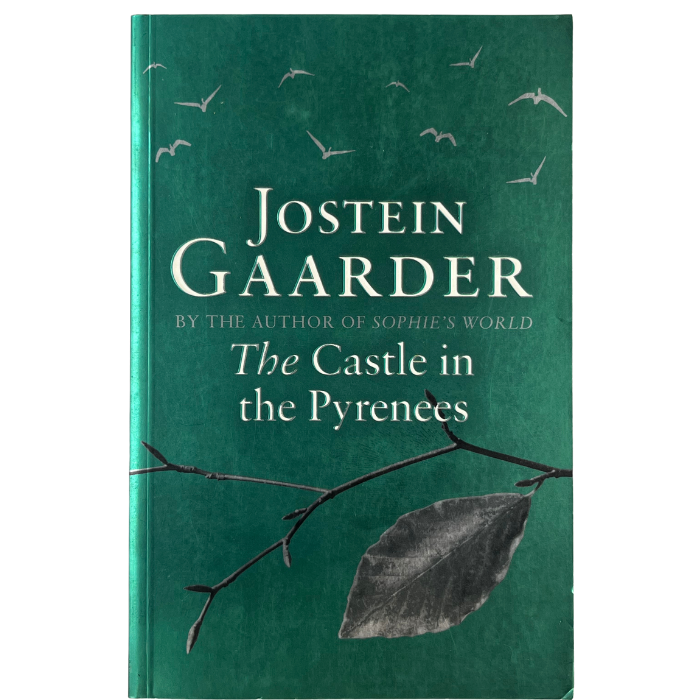
Jostein Gaarder became an international sensation with ''Sophie's World,'' his novel that introduced millions to the history of philosophy. ''The Castle in the Pyrenees'' is a return to familiar territory—a meditation on love, fate, guilt, and the mysteries of existence—but with a more intimate, personal focus.
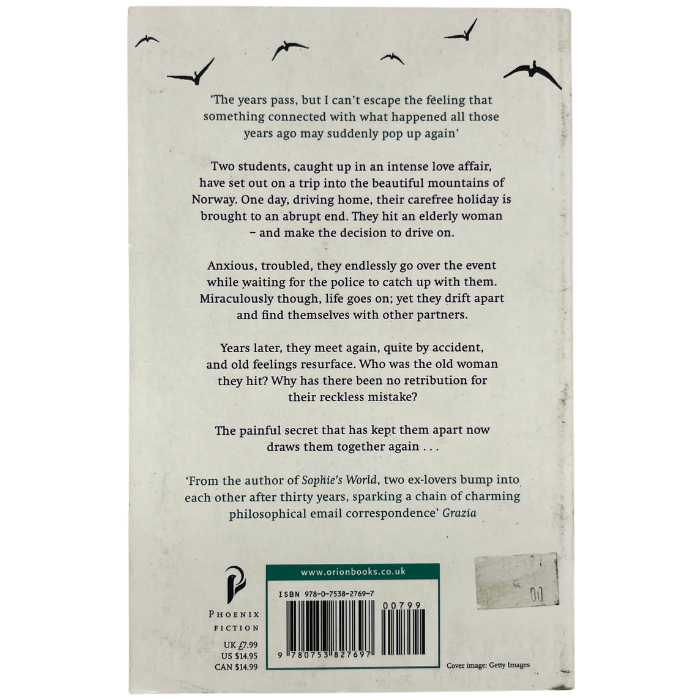
The novel opens with a chance encounter. Steinn, a professor of philosophy, is vacationing in the Pyrenees when he spots Solrun, a woman he hasn't seen in thirty years. They were lovers as students in Norway, deeply in love, until a terrible event tore them apart. Now, they begin corresponding via email, revisiting their shared past and the questions that have haunted them ever since.
The central event of their past is a car accident. Driving through the Norwegian mountains, they hit an elderly woman—and made the decision to drive on, leaving her behind. The guilt of that moment has shaped their lives, influencing their choices, their relationships, their sense of themselves. But as they correspond, they begin to wonder: was it really an accident? Was there something more at work? The woman they hit, the strange circumstances—could there be a connection to the supernatural, to forces beyond human understanding?
Solrun, it emerges, has become interested in alternative spirituality, in the paranormal, in the possibility of forces beyond rational explanation. Steinn, the philosopher, is skeptical. Their correspondence becomes a debate between reason and faith, science and spirituality, coincidence and destiny.
Gaarder handles this debate with his characteristic lightness and accessibility. The emails are charming, personal, and intellectually engaging. We get to know Steinn and Solrun not just as representatives of philosophical positions but as fully realized human beings—with regrets, hopes, and lingering feelings for each other.
The novel is structured around the idea of ''the castle in the Pyrenees''—a mysterious structure that Steinn and Solrun visited together, which becomes a symbol of the questions they can't answer. What is real? What is imagined? What can we know, and what must we accept on faith?
Grazia magazine describes it as ''a chain of charming philosophical email correspondence.'' That captures the tone perfectly—it's charming, thoughtful, and deeply human.
For readers who loved ''Sophie's World,'' ''The Castle in the Pyrenees'' offers a more intimate, more personal version of Gaarder's philosophical explorations. It's a novel about love and guilt, about the choices that shape our lives, and about the mysteries that remain, no matter how much we learn.
If you enjoy novels that make you think while they move you, this is well worth your time.