Free Support 24/7
011 208 1308

Free Support 24/7
011 208 1308

Ratings: ★★★★☆ (4.1 / 5)
Genre: History, Secret Societies, Freemasonry, Religion, Conspiracy Theory
Book Review:
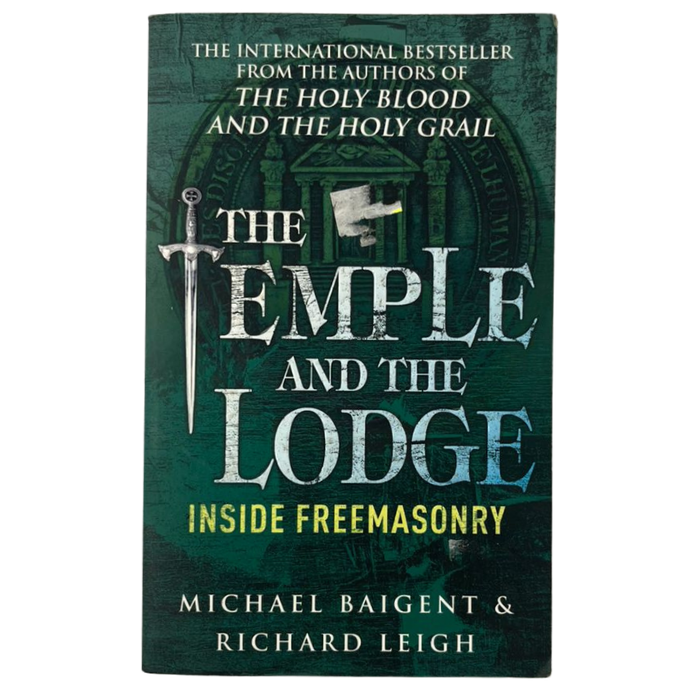
From the authors who brought the world the controversial and wildly popular The Holy Blood and the Holy Grail comes another ambitious historical detective story. The Temple and the Lodge is a fascinating, deeply researched, and often provocative investigation into the origins and evolution of Freemasonry, the world's most famous and influential secret society.
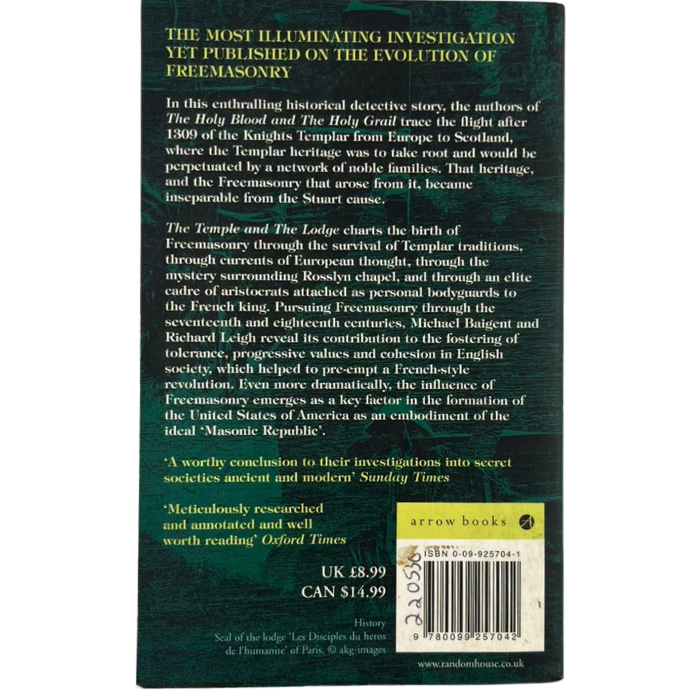
Baigent and Leigh begin their quest in the early 14th century, with the dramatic and brutal suppression of the Knights Templar by the French king and the Pope. Accused of heresy and burned at the stake, the order was seemingly destroyed. But the authors argue that many Templars escaped the persecution, fleeing to the one place in Europe where they could find refuge: Scotland. There, protected by a rebellious Scottish king, the Templars survived, and their traditions and beliefs began to merge with the local guilds of working stonemasons.
This fusion, the book contends, gave birth to modern Freemasonry. The authors then trace the movement's development through the centuries, showing how it became intertwined with the Stuart dynasty's struggle to reclaim the British throne, and how it spread throughout Europe and across the Atlantic. They explore its connections to Rosslyn Chapel, the enigmatic Scottish chapel made famous by The Da Vinci Code, and argue that Freemasonry played a crucial role in fostering the Enlightenment values of tolerance, reason, and progressive thought.
The book's most dramatic claim is its exploration of Freemasonry's influence on the founding of the United States. Baigent and Leigh present a compelling case that many of the American Founding Fathers were dedicated Masons, and that the new republic they created was, in many ways, an embodiment of the ''ideal Masonic Republic''—a nation built on principles of liberty, equality, and fraternity.
The Temple and the Lodge is not without its critics. Like the authors' previous work, it relies on speculation and inference, weaving together historical facts with intriguing but unproven connections. Mainstream historians may dispute some of its conclusions. However, as a work of historical detective fiction, it is utterly compelling. It is a richly detailed, thought-provoking, and endlessly fascinating journey into the hidden corners of history, shedding light on a secret society that has shaped the modern world in ways we are only beginning to understand. For anyone interested in the hidden currents of history, this book is an essential and enthralling read.