Free Support 24/7
011 208 1308

Free Support 24/7
011 208 1308

Ratings: ★★★★★ (4.7/5)
Genre: Science Fiction, Classic Literature, Dystopian Fiction, Adventure
Book Review:
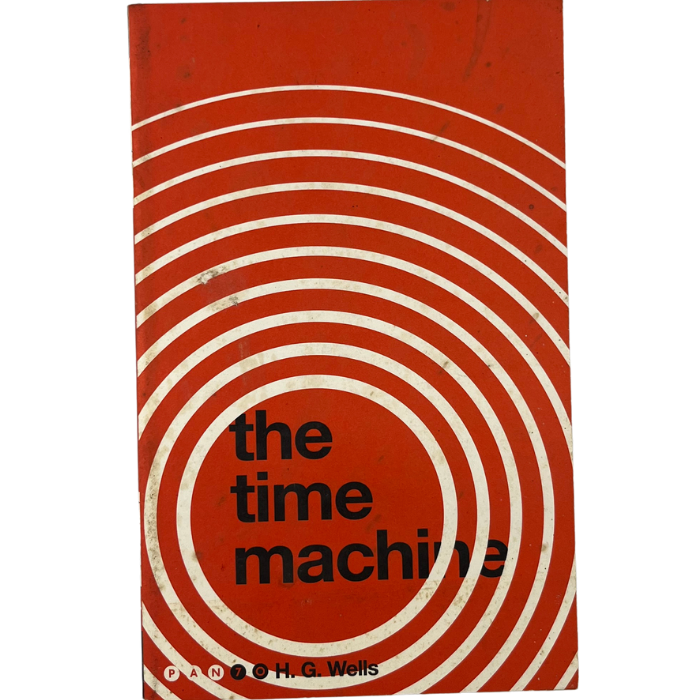
H.G. Wells's ''The Time Machine'' is more than just a novel; it's a foundation stone of science fiction. Published in 1895, it introduced the concept of time travel as a narrative device and used it to explore ideas that remain startlingly relevant today. It's a book that has never gone out of print—and for good reason.
The premise is deceptively simple. A brilliant Victorian scientist, known only as the Time Traveller, demonstrates a model of his time machine to his skeptical dinner guests. A week later, he reappears, disheveled and exhausted, and tells them his story. He has traveled to the year AD 802,701, where he discovers a world transformed.
On the surface, this future Earth seems like paradise. The human race has evolved into the Eloi—small, delicate, childlike creatures who live in peaceful communities, free from toil and strife. They spend their days playing, eating fruit, and sleeping in beautiful but decaying buildings. The Time Traveller initially believes he has found a utopia.
But he soon discovers the darkness beneath. The Eloi are not the only descendants of humanity. Living underground are the Morlocks—ape-like, pale creatures who tend the machinery that keeps the surface world functioning. And the Morlocks, it turns out, have a terrible relationship with the Eloi. They are carnivorous, and the Eloi are their prey.
Wells's vision is both thrilling and deeply unsettling. The Time Traveller's growing horror as he uncovers the truth about this future world is palpable. The chase through the dark tunnels, the desperate attempt to recover his machine, the final flight from the Morlocks—these scenes are as gripping today as they were in 1895.
But what elevates ''The Time Machine'' beyond mere adventure is its intellectual depth. Wells was a socialist, and the novel is a powerful critique of class division. The Eloi and Morlocks represent the ultimate consequence of a society split between the idle rich and the exploited working class. The Eloi have become beautiful but helpless; the Morlocks have become monstrous but powerful. It's a warning about where inequality might lead.
The novel also explores evolution in a way that was new and shocking to Victorian readers. Wells imagines not progress but devolution—humanity splitting into two species, both degraded. The final vision of a dying Earth, with a giant crab-like creature scuttling on a desolate beach, is one of the most haunting images in literature.
For readers new to Wells, ''The Time Machine'' is the perfect place to start. It's short, fast-paced, and endlessly thought-provoking. For those already familiar, it's always worth revisiting. It's a book that rewards rereading, revealing new depths each time.
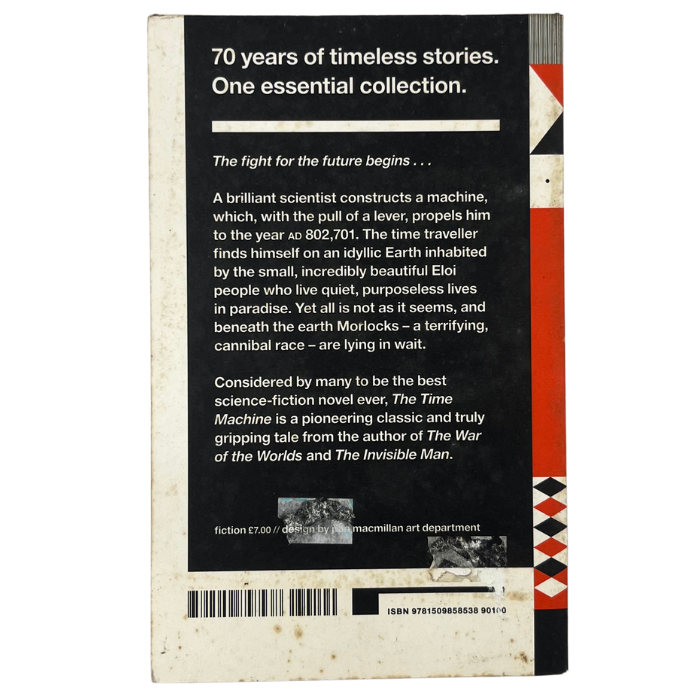
As the cover notes, this is ''a pioneering classic and truly gripping tale.'' It's also a reminder of why Wells remains the father of science fiction. Highly recommended.