Free Support 24/7
011 208 1308

Free Support 24/7
011 208 1308

Ratings: ★★★★☆ (4.4/5)
Genre: Biography, Political History, Women's Studies, Sri Lankan History
Book Review:
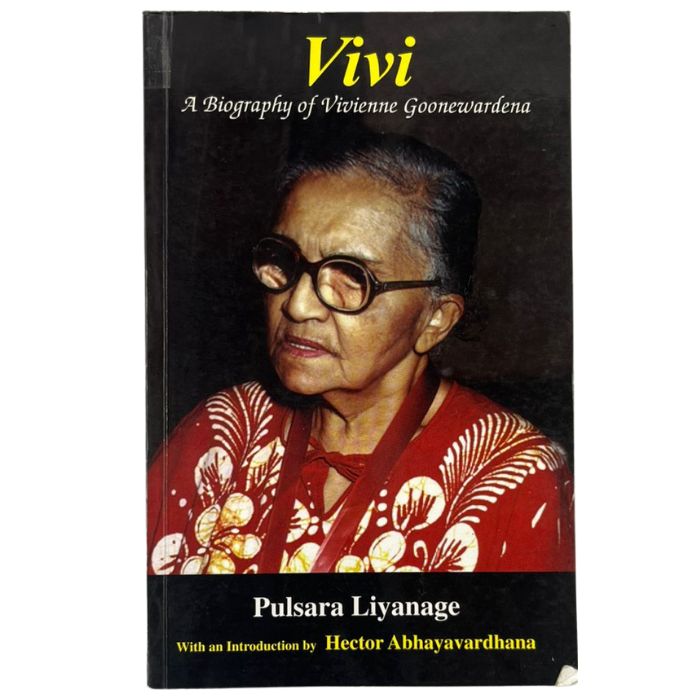
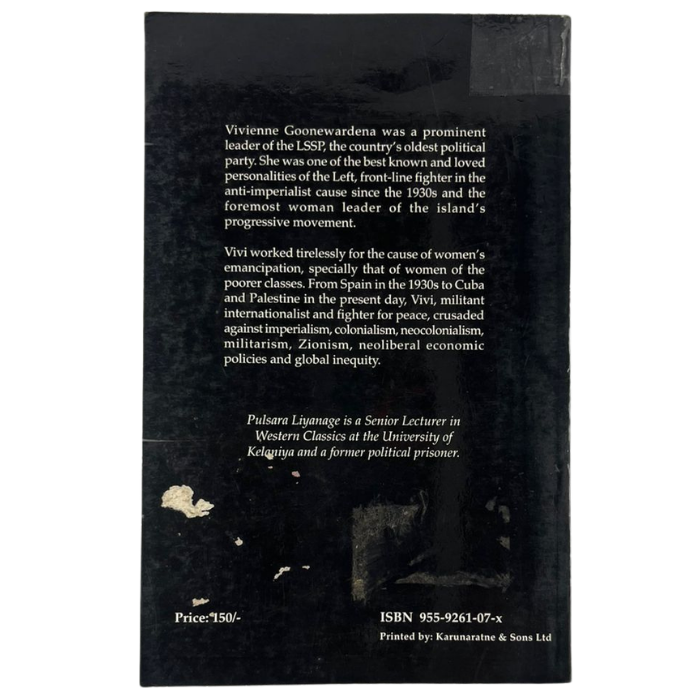
Pulsara Liyanage's ''Vivi'' restores to public memory a figure whose significance to Sri Lankan political history cannot be overstated. Vivienne Goonewardena—''Vivi'' to generations of comrades and admirers—was not merely a participant in the island's left movement but one of its central architects and most enduring symbols.
The biography benefits enormously from its author's unique perspective. Liyanage, a Senior Lecturer in Western Classics at the University of Kelaniya and a former political prisoner herself, brings both scholarly rigor and lived understanding to her subject. Hector Abhayavardhana's introduction adds further authority, situating Goonewardena within the broader currents of Sri Lankan and international left politics.
What emerges from these pages is a portrait of extraordinary commitment. Goonewardena's political awakening in the 1930s placed her at the dawn of organized left politics in Ceylon. Her anti-imperialist convictions took her from local struggles to international solidarity—from Spain during the Civil War to Cuba after its revolution, from opposition to Zionism to solidarity with Palestine. Her internationalism was not merely rhetorical but embodied in sustained engagement with struggles across the globe.
The book rightly emphasizes Goonewardena's pioneering role as a woman leader. In a movement and a society where women's political leadership was rare and hard-won, she carved out space not only for herself but for the cause of women's emancipation generally. Her focus on women of the poorer classes reflected a class analysis that distinguished her from liberal feminism—she understood that gender oppression intersected with economic exploitation.
Liyanage also documents Goonewardena's later campaigns against neoliberalism and global inequity, demonstrating the consistency of her commitments across decades of political change. She remained a militant to the end, adapting her analysis to new forms of exploitation without abandoning her fundamental principles.
For readers interested in Sri Lankan political history, the trajectory of the left, women's leadership, or simply the story of an extraordinary life dedicated to justice, ''Vivi'' is indispensable. It reminds us that the struggles of the past continue to inform the present, and that figures like Vivienne Goonewardena deserve not merely remembrance but emulation.