Free Support 24/7
011 208 1308

144259-img.png)
1 ×LKR 1,000.00

1 ×LKR 700.00
1 ×LKR 700.00
1 ×LKR 1,000.00
1 ×LKR 700.00
1 ×LKR 1,000.00
1 ×LKR 800.00
1 ×LKR 800.00
1 ×LKR 1,000.00
Free Support 24/7
011 208 1308

Ratings: ★★★★☆(4.2/5)
Genre: #LiteraryFiction, #ComingOfAge, #ContemporaryFiction, #JapaneseLiterature
Book Review:
Haruki Murakami's ''Hear the Wind Sing'' is where it all began. Before the international fame, before the surreal masterpieces, there was this slender debut novel—a book that contains the seeds of everything that would make Murakami one of the most beloved writers of our time.
The novel is narrated by an unnamed protagonist, a university student home for summer break in 1970. He spends his time at J's Bar with his friend ''the Rat,'' drinking beer, smoking cigarettes, eating peanuts, and talking about writing and women. The plot, such as it is, follows his brief relationship with a girl who has lost her little finger. But the plot is not the point.
What matters is the atmosphere, the voice, the sensibility. Murakami's prose—even in translation—has a distinctive quality: casual yet precise, detached yet deeply felt. The narrator drifts through his summer, observing the world around him with a mixture of irony and melancholy. He reads, he listens to music (the Beatles, the Beach Boys, Elvis), he remembers, he forgets.
The novel is structured as a series of fragments: memories, conversations, reflections. The narrator tells us about his past relationships, his struggles as a writer, his thoughts on everything from death to pop culture. The Rat, his friend, is a brooding presence, always threatening to write a novel but never actually doing it. Together, they embody a certain kind of youthful alienation—the feeling of being adrift in a world that doesn't quite make sense.
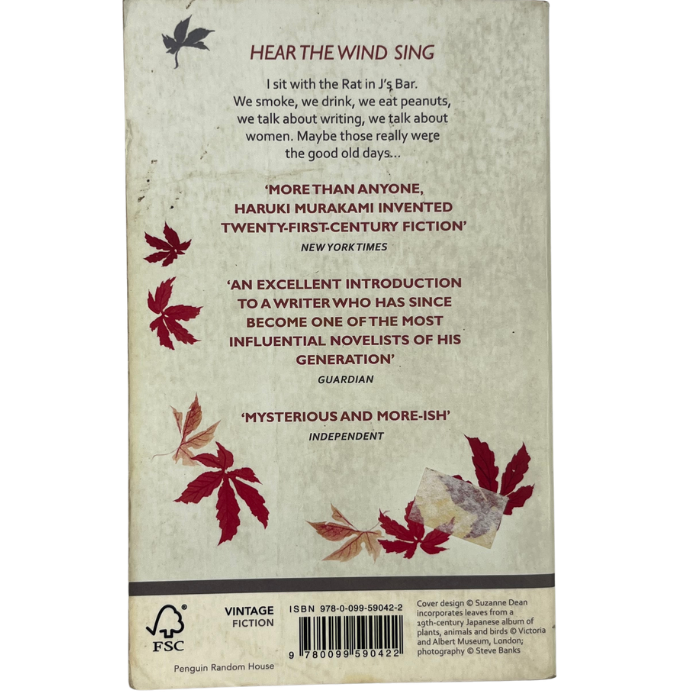
The New York Times has said that ''more than anyone, Haruki Murakami invented twenty-first-century fiction.'' Reading ''Hear the Wind Sing,'' you can see why. The elements that would define his later work are all here: the pop culture references, the existential ennui, the mysterious women, the deadpan humor, the sense that beneath the surface of ordinary life lies something strange and wonderful.
The Guardian calls it ''an excellent introduction to a writer who has since become one of the most influential novelists of his generation.'' That's exactly right. While not as complex or ambitious as ''The Wind-Up Bird Chronicle'' or ''Kafka on the Shore,'' this novel has a charm and freshness that makes it special. It's Murakami before he became Murakami—raw, experimental, finding his voice.
The Independent describes it as ''mysterious and more-ish,'' and that's accurate. The novel is short, almost a novella, and it leaves you wanting more. It's a perfect entry point for readers new to Murakami, and a fascinating glimpse into the origins of his genius for longtime fans.
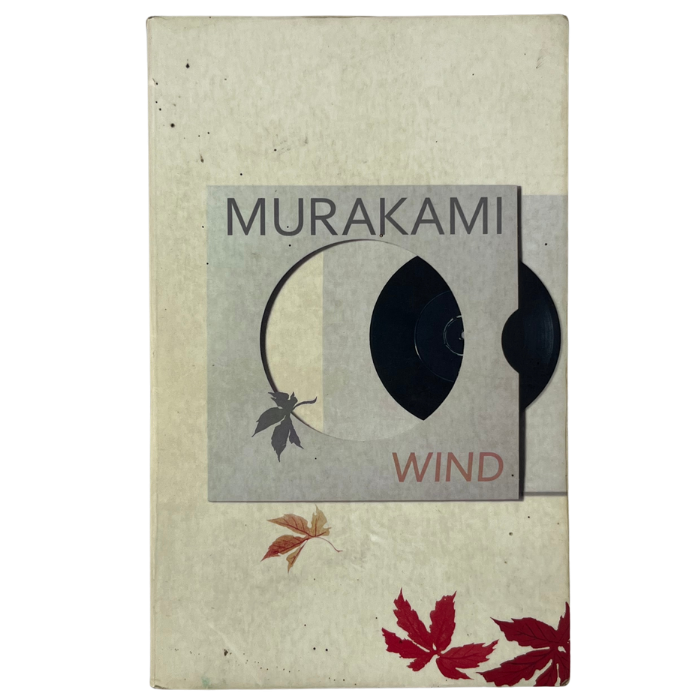
This Vintage edition includes a translation by Ted Goosen and features detailed copyright information for the song lyrics that pepper the text—a reminder of how central music is to Murakami's world. The cover design incorporates leaves from a 19th-century Japanese album, beautifully evoking the novel's blend of tradition and modernity.
''Hear the Wind Sing'' is a quiet masterpiece—a novel about youth, memory, and the passing of time. It's the sound of a great writer finding his voice, and it's a joy to listen to. Highly recommended.