Free Support 24/7
011 208 1308

Free Support 24/7
011 208 1308

Ratings: ★★★★☆ (4.5/5)
Genre: Anthropology / Cultural Studies / Sri Lankan Studies
Book Review:
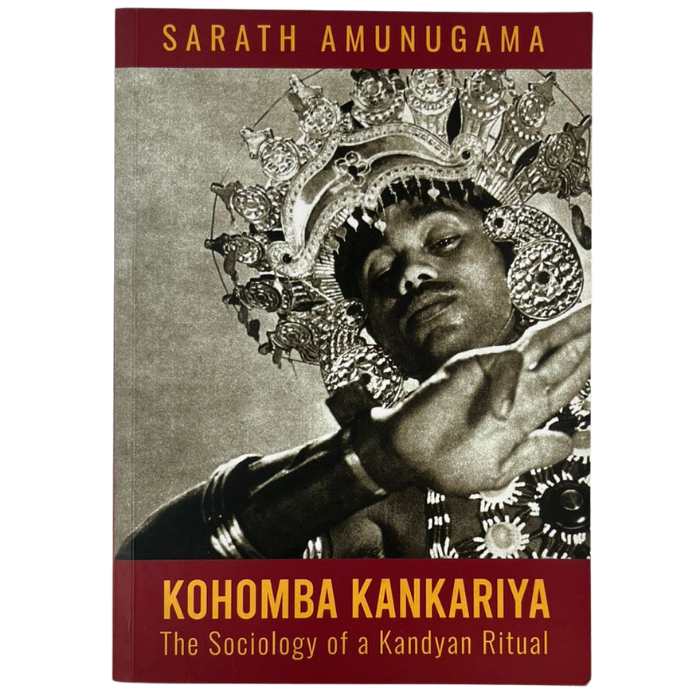
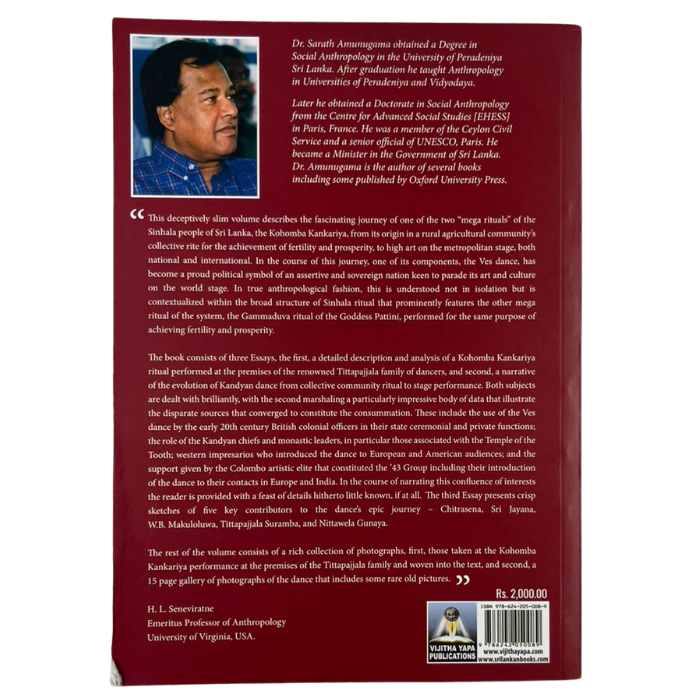
Dr. Sarath Amunugama's ''Kohomba Kankariya: The Sociology of a Kandyan Ritual'' is a remarkable work of scholarship that illuminates one of Sri Lanka's most important cultural traditions. As H.L. Seneviratne, Emeritus Professor of Anthropology at the University of Virginia, notes in his introduction, this ''deceptively slim volume'' offers a fascinating journey through the transformation of a ritual from its rural origins to its place on the world stage.
Amunugama brings extraordinary credentials to this task. Educated in social anthropology at the University of Peradeniya and later at the Centre for Advanced Social Studies (EHESS) in Paris, he has served as a member of the Ceylon Civil Service, a senior official at UNESCO, and a Minister in the Government of Sri Lanka. This combination of academic training and practical experience gives his work unusual depth and authority.
The book focuses on the Kohomba Kankariya, one of the two ''mega rituals'' of the Sinhala people (the other being the Gammaduva ritual of the Goddess Pattini). Originally a collective rite performed by rural agricultural communities to ensure fertility and prosperity, the ritual has undergone a remarkable transformation. One of its components, the Ves dance, has become a proud political symbol of an assertive nation, performed on national and international stages.
Amunugama's analysis is particularly valuable for its attention to the multiple forces that shaped this transformation. He examines the role of British colonial officers who incorporated Ves dance into their state ceremonies, the Kandyan chiefs and monastic leaders (especially those associated with the Temple of the Tooth) who preserved and promoted the tradition, Western impresarios who introduced the dance to European and American audiences, and the Colombo artistic elite (including the '43 Group) who supported its development.
The book consists of three essays. The first provides a detailed description and analysis of a Kohomba Kankariya performed at the premises of the renowned Tittapajjala family of dancers. The second traces the evolution of Kandyan dance from collective community ritual to stage performance, marshaling an impressive body of data from diverse sources. The third presents biographical sketches of five key contributors: Chitrasena, Sri Jayana, W.B. Makuloluwa, Tittapajjala Suramba, and Nittawela Gunaya.
The volume is richly illustrated with photographs, including images from the Tittapajjala performance and a 15-page gallery of rare old pictures. These images bring the text to life and provide visual documentation of the traditions described.
For students of Sri Lankan culture, this book is essential reading. For anthropologists interested in ritual and performance, it offers a fascinating case study of transformation. For general readers, it provides a window into a rich and complex tradition.